

In modern baseball the focus is on speed, an idea instilled at the amateur levels, highlighted by cameras of advanced training techniques and displayed on stadium boards after every pitch. But we can’t forget how ridiculous a hitter can look with a change of pace.
Slower pitches have earned some pitchers their 15 minutes of fame, while they have extended the run to others. Here’s a look at slower pitches.
Eephus Division
Rip sewell
Maurice Van Robays, Sewell’s teammate on the Pirates, explained the word “eephus” (possibly from the Hebrew word “efes” or zero) was to qualify “a pitching with nothing on the ball.” Whatever it was, the eephus helped Sewell launch another decade with his new toy and score back-to-back seasons with 21 wins in 1943-44.
Dave LaRoche
LaRoche appeared in two All-Star Games, had 126 saves and was the father of two major league infielders, but is best known for his pitching that reached 30 miles per hour. LaRoche developed this pitch in 1980 while he was bored in the bullpen, and the pitching became a sensation after the southpaw joined the Yankees. His most famous use of the pitch came against Brewers slugger Gorman Thomas, who spun to the ground after swinging to strike out on September 9, 1981.
Steve Hamilton
LaRoche wasn’t the only streamer to use the eephus in the Bronx. Hamilton was a former NBA player who found a second career as a left-handed reliever in the majors. In 1970, the pitch that became known as the “Crazy Float” debuted and sent Indians first baseman Tony Horton crawling into the cave.
However, the pitching was not as popular after Hamilton was sent to the Giants: A National League referee decided it was illegal, explaining with disgust that the Old Circuit was not “a mediocre league.”
Screwball division, or “corkscrew”
Christy Mathewson
The right-hander learned his famous “disappearing” pitch in the summer after he graduated from high school (or possibly Negro League legend Rube Foster), but he didn’t give it that much importance until he confused hitters in his career. try the New York Giants. Mathewson saved the pitch – which runs in the opposite direction of a curve – for the most pressing moments of a game, but it was devastating when he got it out.
Carl hubbell
Hubbell threw his screwball as a southpaw, and the pitching so disfigured the pitcher’s hand that his left palm was bent out after his days on the mound. But there is no question of the heights it reached with that launch. Hubbell won two National League MVP awards, struck out five of the best gunners back-to-back in the 1934 All-Star Game (almost exclusively with the screwball), and then scored 24 consecutive victories.
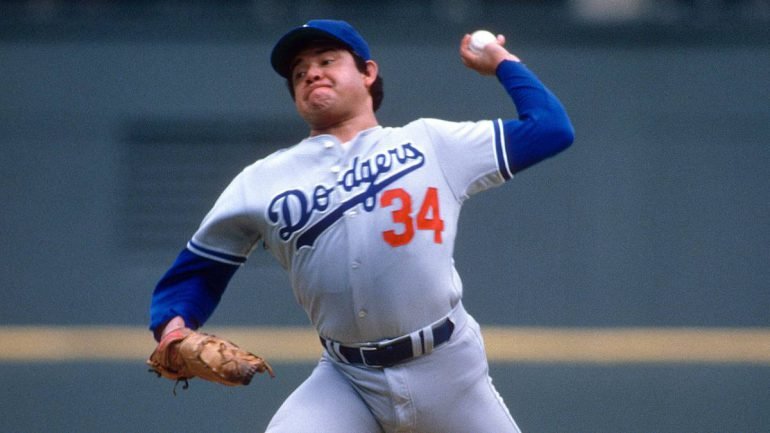
Fernando Valenzuela
The Mexican is the only pitcher to have the screwball as one of the main weapons in his repertoire, and the “Fernandomania” would not have happened without that pitch. The left-hander had enough of that pitching to score victories in his first eight rookie starts and to win the decisive 1981 SCLN Game 5 and become the only rookie to win the Cy Young Award weeks later. Hubbell told the media that Valenzuela’s screwball was the best he had seen, other than the one he threw.
Knuckles Division
Phil Niekro
The right-hander once joked that he had no idea how he was inducted into the Hall of Fame with a lousy repertoire, but the hitters had another point of view. And when Niekro included one of his best knuckle throws with an eephus, things were a bit unfair for his opponents.
Hoyt Wilhelm
His killer knuckle throw (his career adjusted EFE + of 147 is in the top 10 in history) allowed him to be quite durable (1,070 shows, sixth on the all-time list). The knuckle throw was seen as a fantasy pitching used by veteran pitchers to continue the action before Wilhelm made it their primary weapon.
Tim Wakefield
Wakefield began his career as an infielder in the Pirates system, only gaining attention after his Class-A manager spotted him playing a knuckle throw during practice. Although Wakefield wanted to play the infield, it was the knuckle that got him to the big leagues.
Curve Division
Barry zito
In the 21st century, no one has thrown such a fascinating bow as Zito’s. Pitching started over the batter’s head and opponents appeared to be trying to hit a single drop of water in a waterfall. Alex Rodriguez once said the following about pitching: “Don’t even look for it, because you won’t be able to hit it.”
Zack greinke
There was a time last year when it seemed like Greinke wouldn’t concede a single with his slow curve that looked easy enough. Greinke did not hesitate to employ her in 2019, especially with two strikes, and her opponents ended up hitting 46-6 with 16 strikeouts when he shot the goal that did not exceed 70 mph.
Vicente Padilla
Inspiring ex-broadcaster Vin Scully to name one of your pitches is a great honor (Clayton Kershaw knows this very well), and so Padilla must have been very proud when Scully christened his 50 mph curve “the soap bubble.” . The Nicaraguan used the bubble frequently to establish himself in the Los Angeles squad’s rotation in 2010, his last full season as a starter.
Yu darvish
It should come as no surprise that Darvish, whose arsenal includes up to 10 pitches, takes an extremely slow 50-60 mph curve every now and then. Statcast and pitch F / X have been able to record just 15 slow turns in Darvish’s career, but ask Torri Hunter about her ability to knock him down in the batter’s box. Or even Dave LaRoche’s son Adam, who got a taste of what his father served up when Darvish struck out with a 59 mph pitch.
Change Division
Fernando Abad
The Dominican’s “super change” once brought compatriot Adrián Beltré to his knees – and not to hit one of his famous home runs. Floating one up to 59 mph and hitting up to 35 mph less than his fastball, Abad’s super change has frozen several batters in the batter’s box.
Aníbal Sánchez
The Venezuelan’s change, known as La Mariposa, floats to the plate at 60 mph and taps gently on the edge of the bats to generate an easy roll – or occasionally, fanning opponents. Sánchez has revived his career in recent years by slowing down his pitches, and La Mariposa is one of the most attractive weapons to watch in his new repertoire.
Straight Division
Jamie moyer
Major League Baseball pitchers continued to pick up speed throughout Moyer’s 25-year career, but the southpaw continued to throw his fastball that didn’t even hit 80 mph at times. Somehow, his chopped straights and sinker allowed him to pitch until he was almost 50 years old, and no pitcher has possibly done more with less. (GG) (Taken from mlb.com)